
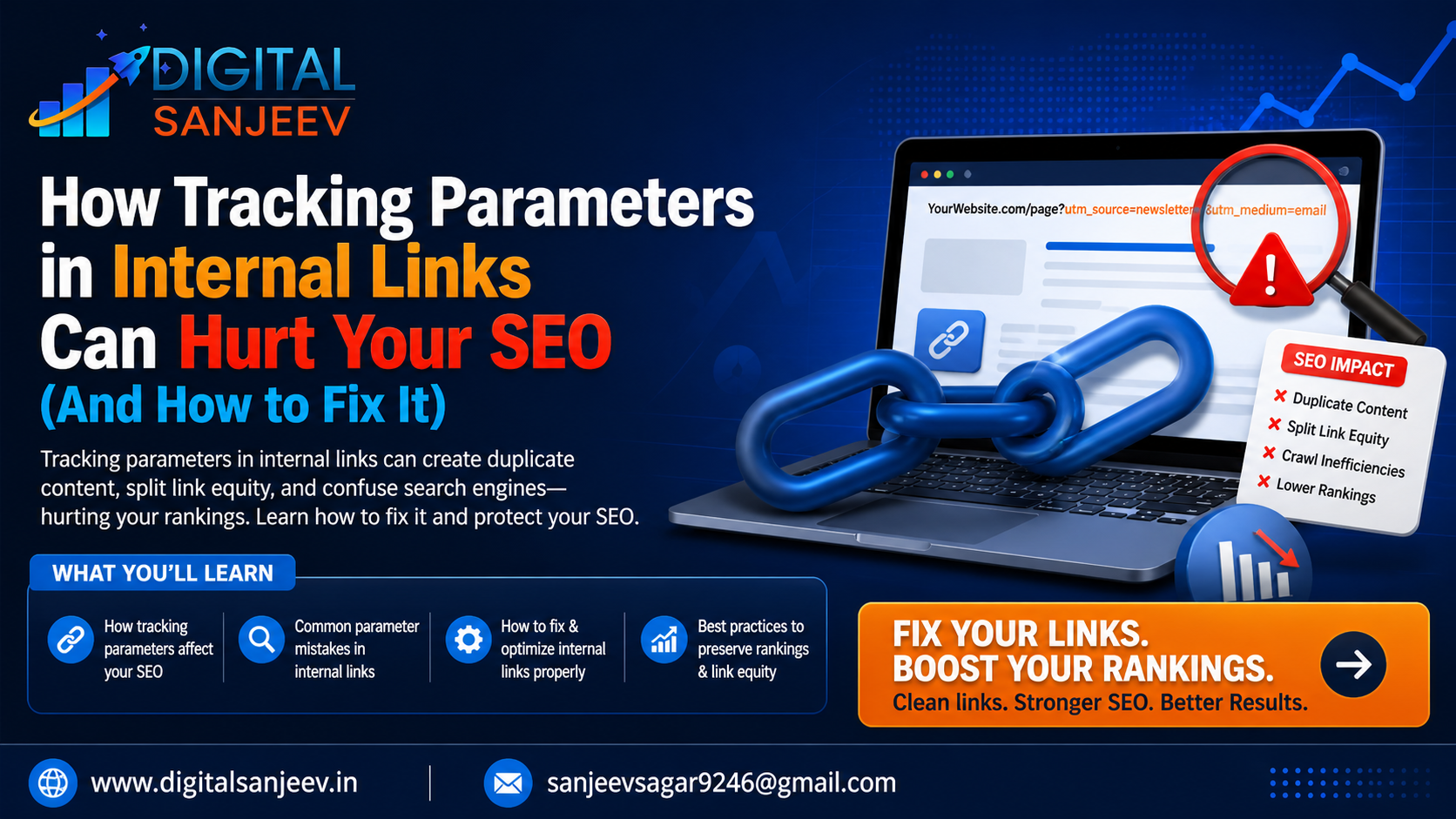
How Tracking Parameters in Internal Links Can Hurt Your SEO (And How to Fix It)
With the current competitive digital world, Digital Marketing Service Providers in Delhi tend to extensively depend on tracking parameters, to gauge performance. Although these parameters are valuable to analytics, when incorrectly used in internal links, they can silently undermine your SEO efforts. Without realizing it, many brands, such as those specializing in Google Ads lead generation India and Instagram marketing experts in Rohini face ranking problems because of the poor management of URLs.
The first step to correcting the problem to enhance your search visibility is in understanding how tracking parameters affect your website.
What Are Tracking Parameters?
Tracking parameters are bits that are inserted onto the URLs to track user behavior, campaign performance or source of traffic. These parameters are usually followed by question marks in a URL and are very commonly used in online marketing campaigns.
Why Marketers Use Them
Parameters monitoring aids marketers examine the effectiveness of campaigns, comprehend user pathways and optimize conversions. Digital Marketing Services are often used by businesses in Delhi as a means of gauging ROI on paid campaigns, social media promotions, and email marketing.
Where Problems Begin
The problem is that the use of these parameters in the internal links and not in the external campaigns can be considered the problem. This gives a page multiple URLs and this can be confusing to the search engines.
How Tracking Parameters Harm SEO
Search engines are geared towards indexing clean, unique URLs. In case of misuse of tracking parameters, they cause duplicate content problems and influence the search engine crawling of your web site.
Duplicate Content Issues
When multiple URLs point to the same page but include different tracking parameters, search engines may treat them as separate pages. This dilutes ranking signals and weakens your SEO performance.
Crawl Budget Wastage
Search engines can consider two or more URLs to the same page to be two or more separate pages. This waters down ranking signs and underperforms your SEO.
Dilution of Link Equity
Search engines spend a small crawl budget on individual websites. Should bots waste time crawling parameter based URLs, as opposed to important pages, your important content might not be indexed correctly. It is a typical problem in business that is oriented on Google Ads lead generation India.
Poor User Experience
Internal links are used to transfer authority throughout your site. Where there are several parameterized URLs, the link equity is split rather than reinforcing one canonical page.
Common Mistakes Businesses Make
Monitoring parameters may render URLs dish eartenly and untrustworthy. In the case of such a brand as Instagram marketing gurus in Rohini, it is crucial to have clean and user-friendly URLs to be credible.
Using Parameters in Navigation Links
The poor management of parameters is a factor which many websites inadvertently damage their SEO.
Ignoring Canonical Tags
In the absence of a suitable canonicalization, search engines are unable to tell the preferred version of a page.
Overusing UTM Parameters Internally
External campaigns should be set aside to the UTM parameters. Their application within results in tracking noise and SEO problems.
How to Fix Tracking Parameter Issues
The solution to these problems will be a strategic management of URLs and SEO best practices.
Use Canonical Tags Properly
Make sure that each page is marked with a canonical tag, which references the original clean URL. This informs search engines on which version to be indexed.
Avoid Internal Use of Tracking Parameters
Make sure that each page is marked with a canonical tag, which references the original clean URL. This informs search engines on which version to be indexed.
Configure URL Parameters in Search Console
Use Google Search Console to tell search engines how to deal with certain parameters. This will aid in eliminating unnecessary crawling.
Implement Clean URL Structures
Keep the URL structure of your site a regular and simple one. This enhances user experience and SEO.
Use Server-Side Tracking Instead
Rather than using URL parameters, server-side tracking or analytics tools can be utilized to track user behavior without changing URLs.
Advanced Optimization Strategies
For businesses offering Digital Marketing Services in Delhi, taking a more advanced approach can provide a competitive edge.
Leverage JavaScript-Based Tracking
JavaScript can be used to monitor user activities without changing the URLs. This makes your site SEO-friendly and yet retrieves valuable data.
Regular SEO Audits
Carry out regular audits to determine issues regarding parameters. Such tools as crawling software can be used to identify duplicate URLs and indexing issues.
Optimize Internal Linking Strategy
Make sure that all internal URLs refer to the main version of a page. This enhances link equity and enhances rankings.
Why This Matters for Your Business
Be it in Google Ads lead generation India or as Instagram marketing experts in Rohini, the health of your site in terms of its SEO directly influences your lead generation and brand visibility.
The mismanagement of URLs might decrease organic traffic and bouncing rates, as well as reduce the conversion rates. Alternatively, the resolution of these problems can greatly enhance your rankings and general online presence.
Tracking parameters are effective marketing tools, when used inappropriately in internal links, may have a more damaging effect on your SEO than the benefit they could provide. Knowing the dangers and using the appropriate remedies, you will be able to save the search visibility of your site, as well as enhance performance.
Digital Sanjeev focuses on the need to practice clean URLs as a component of successful Digital Marketing Services in Delhi. Through optimization of your internal linking structure and wiser management of tracking parameters, you can guarantee better rankings, better crawl efficiency and better online growth.